
If there is an overarching figure in the world of ambient music, American Steve Roach is unquestionably that person. With apologies to Brian Eno. But if you know anything about the genre, as opposed to being a dabbler, you know who Roach is, whereas all those Philistines out there only know the Eno brand.
Roach has been making ambient music, and lots of it, since the early eighties, a pioneer out on the west side of America along with Robert Rich, Michael Stearns, Kevin Braheny, and other early astral voyagers (all of whom are still going strong). Roach’s output is truly astounding. He releases sometimes a few albums a year, so over a long career that’s a ton of music. And his output is pleasantly restless — he’s pioneered tribal, rhythmic ambient; dark ambient; long-form “drift ambient”; the use of field recordings; avant garde atonal ambient, you name it, he’s done it.
Roach’s discography is pretty intimidating for a listener new to him who wants to start with the best. I certainly will not claim to have purchased anything close to his entire output, but I do have roughly fifty of his recordings, both solo and in collaboration, so I think I have as good an idea as anyone of the best ten albums to start your Roach journey with (I won’t be making any pot jokes). Note that all of these recordings are readily available in physical form from Roach but also from all ye online retaylers, such as Emusic, iTunes, etc. So you have no excuse if are curious enough to consider a purchase. On Roach’s site you can sample basically all of his stuff, so see the link at the end of the post.

Structures from Silence (1984)
Generally considered his first classic and a touchstone of ambient in general, this is three long, peaceful synth-based pieces. As noted on ye olde Wikipedia, this is his first “purely textural” album, meaning the pieces are long and are given space to stretch out. The pieces are also quite pleasantly minimalistic and sparse, showing a departure from the early European Berlin-school influences on a lot of early eighties synth music. Structures from Silence is one of the albums essential to an ambient music collection.
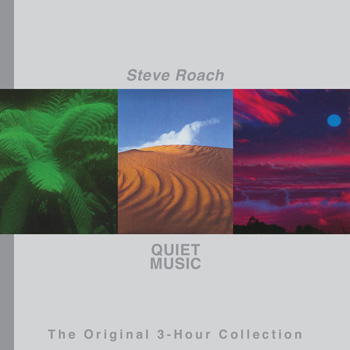
Quiet Music (1986)
Another essential early album, this is a collection of material first issued on three cassettes. The music was commissioned for healing arts programs, which means the emphasis is on a deep, reassuring pastoral spirituality. Again, the music is quite sparse and gentle with lots of space between the notes for reflection, with some nature field recordings added. I can honestly say that there is no better music for quiet meditation than the music on these recordings.
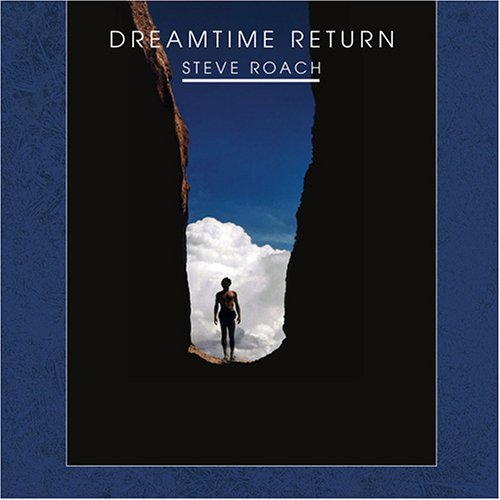
Dreamtime Return (1988)
This pioneering release (two disks, of course) is where Roach started his tribal ambient journey. Inspired by Australian Aboriginal culture, the album is a mixture of trancelike beats (but slow ones, so don’t be expecting no techno), combined with the organic sounds of didgeridoo, Aboriginal percussion and chants, and mysterious synth sounds, meant to conjure up a mystical vision of the dreamtime. And dang if it’s not totally successful! A highly influential recording that still holds up today.
Darkest Before Dawn (2002)
Probably the best known of Roach’s long-form seventy-minute albums, Darkest Before Dawn is pure dark ambient, so dark that most Goths would probably be scared off. It sounds like it was recorded in the deepest depths of space (in theory, I know space is a vacuum) or in the cavernous belly of a spacecraft. For the entire span the mournful sounds weave in and out through a miasma of reverb — this isn’t so much peaceful as it is trance-inducing. Another don’t-miss release.
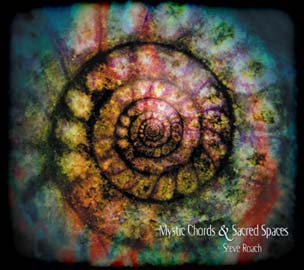
Mystic Chords and Sacred Spaces (2003)
Another mega-release. I guess I like those. This is a four-disk set of one long-form piece and three disks of shorter pieces. While the mood of this music is not generally dark, there’s a mysteriousness to the ever-shifting tones and the odd whistly sounds that linger in the background of many of the pieces. Some pieces are prettier, some atonal, and some feature otherwordly birdies chirping. There’s a pervasive feeling of the fecundity of nature, overgrowing everything in a jungle environment, kind of rainy and soggy. Ah hell, it’s hard to capture these things in words. But yet another essential ambient release.

New Life Dreaming (2005)
This is quite possibly my favourite Roach album, and that perception could be based on the first track alone. “Perfect Dream” consists of a massive wave of undulating bass synth that repeats over and over, with more delicate synth sounds in an interplay underneath. It puts me in a wonderful state of mind that few pieces can achieve. It also scares the crap out of my cat for some reason. The other four tracks are good examples of Roach’s drift ambient (big pads) and also feature some tranquil field recordings.
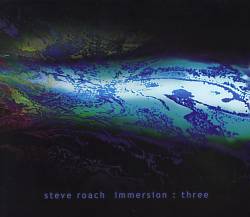
Immersion Three (2007)
The Immersion series is a collection of long-form pieces, by which I mean they average an hour plus. They are pure drift ambient, monolithic slabs of reverby synth pads with little variation. In other words, true ambient that you can put on in the background to your day, or to send yourself to sleep, or to do some zazen meditation. The beauty just sort of trickles into you. There are variations in mood, of course, between pieces, but not within them. I choose Immersion Three over the others because it’s a three-disk set (that came in a lovely digipak) as opposed to a single release. That’s like, four hours of drift!
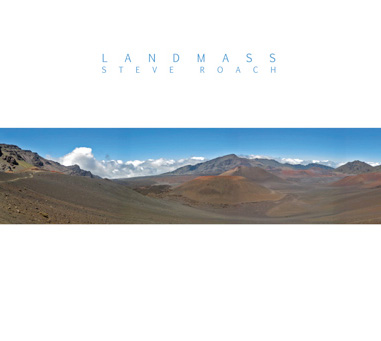
Landmass (2008)
Landmass is in the beat-y, sequenced style going back to Dreamtime Return. The mood is set by those sequenced, repetitive beats as well as the trademark leviathan clouds of pads, conjuring up the vastness of desert scenery. Roach is quite adept at matching titles with the exact atmosphere of the piece. While not one of his top five albums or anything, this one demonstrates just how consistently interesting Roach’s work is, despite operating within the theoretically limiting confines of ambient.

Dynamic Stillness (2009)
Another big release (two disks). The title of Dynamic Stillness is quite apt, for there is a sense of permanence and calm but also an energy (I refuse to use the word “propulsive”…don’t make me!). The mood is darker, as suggested by the cover, sort of the calm before the lightning storm. A long drift piece, “Birth of Still Places”, is the centrepiece. Even though the album is beatless, there’s definitely an ominous electricity to this album, which is one of Roach’s best.

Low Volume Music (2012)
Cheating a little here, since I hadn’t intended to put any of Roach’s numerous collaborative albums on this list. But this one is just too good not to mention. It’s a collaboration with fellow celebrated ambient artist Dirk Serries, better known as Vidna Obmana. It’s a little unusual for both artists in that, as the title suggests, it’s very restrained, sparse music in which less is more, and hence hearkens back to Roach’s early eighties material and Serries’ early nineties albums. The reason I recommend it here is it’s a wonderful execution of delicate drift music that demonstrates these guys are getting better with age, like a couple of fine wines.
 Make Your Own Taste
Thank you for list and short explanation. Lots of classics, and some newer albums for me to explore.
LikeLike
Thanks! It was tough- he has made dozens of albums to choose from.
LikeLike
Pingback: The sonic satori of THOM BRENNAN | Make Your Own Taste·
I would also add The Magnificent Void – always found it an essential album of his and one that keeps surprising me on repeated listens, even after 10+ years.
LikeLiked by 1 person
Yep, that’s another classic. One of his more challenging releases.
LikeLike
Pingback: STEVE ROACH – The Delicate Forever (2014) | Make Your Own Taste·
Pingback: QUIET FRIENDS: A 30th Anniversary Tribute to Steve Roach’s Structures from Silence (2014) | Make Your Own Taste·
Pingback: PHILLIP WILKERSON – Wonderous Encounters (2014) | Make Your Own Taste·
Pingback: PHILLIP WILKERSON – Wondrous Encounters (2014) | Make Your Own Taste·
I am brand new to Steve Roach’s music.
Is it please ok to offer a dissenting (initial) viewpoint? N.B. I am *not* looking to gratuitously dump on music that people are fans of.
But I am looking for an argument, to be persuaded that my initial impressions are mistaken, that my wooden ears have missed something of aesthetic worth. If it simply boils down to a matter of taste, then that’s fine and I’ll stop being rude.
Roach compares poorly to Eno and Harold Budd. It all just seems too formless, both technically and culturally. Roach’s formlessness must be a deliberate move on his part. But thus far, it seems formless to the point of just barely being art at all.
Why is Roach’s deliberate formlessness good? And what is the point of it? E.g. it’s not an avant-garde breaking of form such as the drone music of Eliane Radigue.
There seems to a lot of talk of “healing effects” as being an ambition of Roach’s music. Is this the sort of thing that he wants to do?
LikeLike
Thanks for your comment. I do think it’s mostly a question of taste. Having said that, Roach has become more and more abstract over the years — and very prolific. His drifty stuff has started to become really samey, and he rarely does music that’s more structured now. I don’t listen to many of his new releases for that reason. His fans would disagree! If you were to want the best of his music, earlier releases like “Structures from Silence” and “Quiet Music” are not at all formless, and from his “later” (but still older) music, “New Life Dreaming” nicely rides the line between structured and formless. But I cannot disagree with you that much of his music is samey at this point. You’d have to comb through the releases to find the ones that suit you…focusing on older music.
LikeLiked by 1 person
Thank you for your suggestions.
It’s also the case that initial impressions aren’t always one’s final impressions.
This is a great blog btw. Thank and congratz.
I’ve been reading articles here for a while though this is my first comment.
LikeLike
Thank you. I don’t write the blog any more, but it’s big enough a person can spend a few hours on it!
By the way, I think ambient artists like Philip Wilkerson and Altus/Loneward have more to offer us than some of those “older” classic artists at this point.
LikeLike
Cool. Thank you for these recommendations. I’ll check them out.
What about William Basinski? What do you think about his music?
The funny thing is, I was just about to make another comment here to say that in the couple of days since we’ve been talking, I’ve actually changed my mind (somewhat) about Steve Roach!
It may be a matter of the mood that the listener is in as much as the listener’s taste. Confessedly, my mood has been very dark of late but this is due to not to personal circumstances (which are fine) but due to the horrific events afflicting our human species elsewhere – the Palestinian Genocide; the even greater suffering of the Sudanese Civil War plus the fact that this conflict receives so little attention and most of this media attention is so wrong-headed.
https://www.aljazeera.com/program/the-listening-post/2024/4/27/sudan-a-savage-war-and-toxic-information-battle
The artistic question concerns the nature and idea of musical repetition – in electronic ambient music in the case of Roach. In musical Minimalism in the case of Steve Reich and Philip Glass.
The Wikipedia article on “Minimal Music” has a useful summary of pro and contra viewpoints. Whilst they may differ in their critical assessments, a synthesis of the two viewpoints may give us the best description.
Contra – “ that minimalist repetition is dangerously seductive propaganda, akin to Hitler‘s speeches and advertising (Elliott Carter); even that the commodity-fetishism of modern capitalism has fatally trapped the autonomous self in minimalist narcissism (Christopher Lasch)”
Carter’s remark about “Hitler’s speeches” is overblown – he’s obviously been reading Adorno – but the linkage of music and ideology may take us somewhere.
Pro –
Steve Reich
“Stockhausen, Berio, and Boulez were portraying in very honest terms what it was like to pick up the pieces after World War II. But for some American in 1948 or 1958 or 1968—in the real context of tailfins, Chuck Berry and millions of burgers sold—to pretend that instead we’re really going to have the darkbrown Angst of Vienna is a lie, a musical lie.”
What made me change my mind about Roach’s artworks was watching the video of a recent live performance. I also happen to like Roach’s habitually serious expression whenever he is photographed.
https://www.youtube.com/watch?v=eJ00TUCgJZE
For most of this performance Roach is habitually making the smallest adjustments to his electronic soundscape. Tweaking a knob here, pressing a button, raising/lowering the volume or distortion effects. For only a small part of the performance does Roach play instruments, the keyboards and guitar, as traditionally understood. So how do we describe Roach’s performer’s musical memory? To do so, we would likely have to turn to language of AI programming. This is self-evidently music that contains much that is Truthful about contemporary world.
LikeLike
It’s certainly easy to be depressed about the state of the world. Climate change has me down 24/7 and has for about 30 years.
I think evaluations of minimalism as fascist-adjacent are academic twaddle. Fascist music tended to be overblown and symphonic. Hitler was a huge Wagner fan. Music is just music sometimes. Minimalism is just sparse and repetitive, like a lot of Indigenous sounds from around the world. That’s part of the appeal.
Anyway, Ambient 4 seems ahead of its time, to be honest. I think it bears a stronger relationship to things like Alva Noto and Taylor Deupree, more “sound art” than ambient, than anything of that time. Maybe some of Jon Hassell’s stuff was similar. Or Krautrock offshoots like Cluster (with whom Eno had an association).
I enjoy some Basinski, but from what I can tell he’s sort of a one-trick pony (make old tapes sound nice).
LikeLike
Do you know anything that resembles Brian Eno’s “Ambient 4: On Land”?
This is how I came to Roach’s music – his album “Early Man”
I like how the way in which sounds that aren’t traditionally thought of as musical become integrated into the soundscape.
Have you heard of SPK’s album “Zamia Lehmanni (Songs of Byzantine Flowers)“?
https://www.youtube.com/playlist?list=OLAK5uy_m4WfHYhtoT3a1T_btm2KCdcERPqWWjs8o
LikeLike